
Veritas Health Sydney
DEXA Scan
Measure what matters for long-term health
At Veritas Executive Health, our GE Lunar iDXA DEXA scanner provides an exceptionally detailed assessment of your body composition and bone health, allowing our medical team to look beyond traditional measures such as weight and BMI.
Using very low-dose X-ray technology, a DEXA scan measures bone mineral density, lean muscle mass and body fat, including where fat and muscle are distributed throughout your body. This provides an objective baseline from which changes in your health, body composition and physical performance can be monitored over time.
Located within our purpose-built practice on Macquarie Street in Sydney, our DEXA assessment forms part of Veritas’ personalised approach to preventative health and healthy ageing.
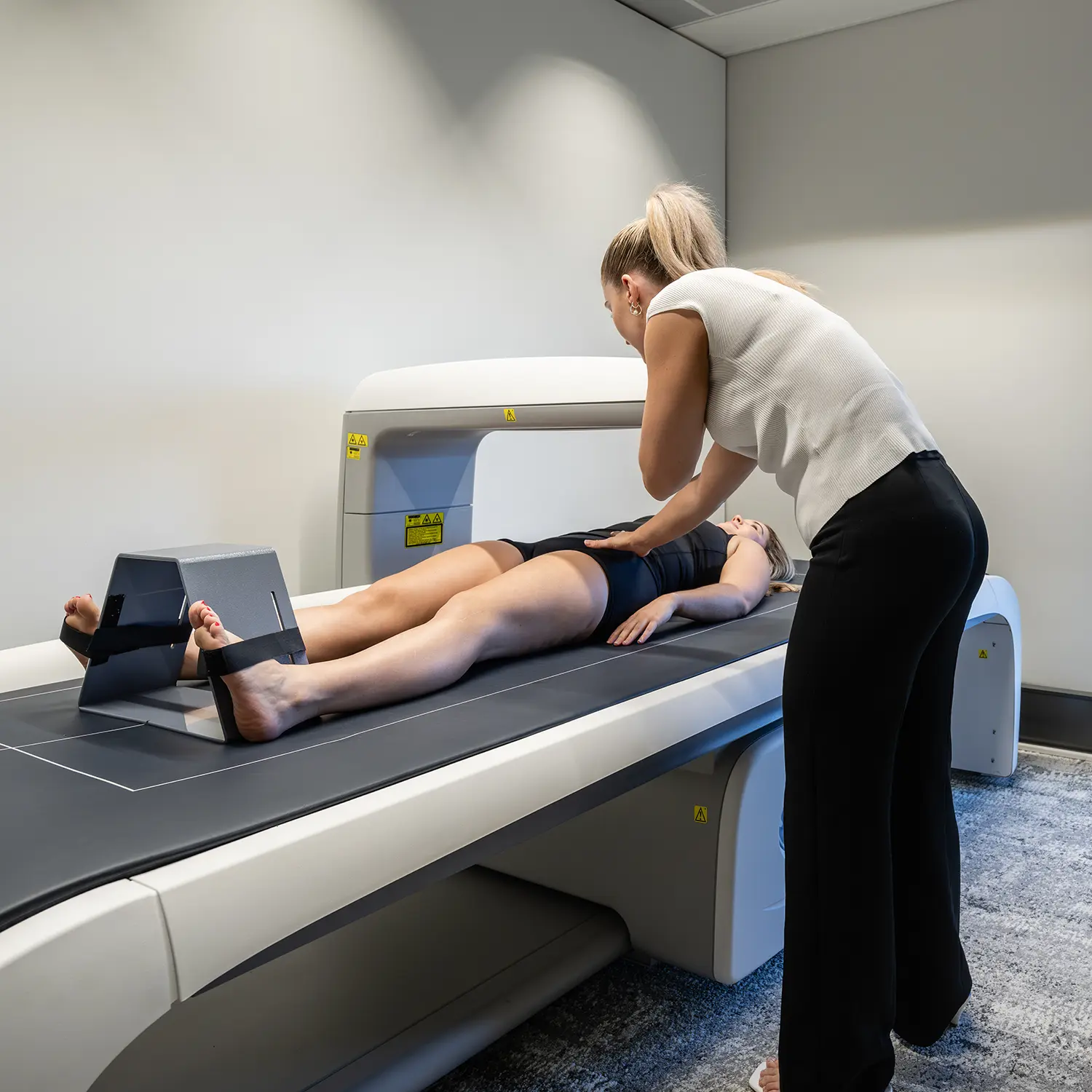

A DEXA scan is quick, non-invasive and painless.
What happens during a DEXA scan?
You will lie comfortably on the scanning table while the scanner passes over your body. The technology uses a very low level of X-ray radiation to collect the measurements required to assess your body composition and/or bone density.
Radiation exposure from DEXA is very low compared with many other forms of medical imaging.
Once your scan has been completed, the results provide detailed measurements that can be reviewed as part of your broader health assessment.
DEXA stands for Dual Energy X-ray Absorptiometry. It is an advanced medical imaging technology used to assess both body composition and bone mineral density.
The GE Lunar iDXA system used at Veritas is research-grade technology more commonly found in hospitals, universities and elite sports science environments. Its high level of precision allows us to assess subtle differences in bone, fat and lean tissue throughout different regions of the body.
Rather than relying on calculations based on height and weight, or estimates produced by standard body composition scales, DEXA provides a much more detailed picture of how your body is composed.
Your assessment can measure:
- Total body fat percentage
- Visceral adipose tissue (visceral fat)
- Subcutaneous adipose tissue
- Lean muscle mass
- Regional muscle and fat distribution
- Differences in muscle mass between the left and right sides of the body
- Bone mineral density
- Indicators associated with sarcopenia
- Changes in body composition when scans are repeated over time
Two people can weigh exactly the same yet have very different levels of muscle, body fat, visceral fat and bone mass.
This is why weight or BMI alone can provide an incomplete picture of health.
A DEXA body composition scan separates the body into bone, lean tissue and fat tissue and shows how each is distributed across different regions of the body.
This can be particularly valuable when you are seeking to improve your body composition, increase or preserve muscle mass, monitor the effects of an exercise or nutrition program, or establish an objective baseline as part of a longer-term preventative health strategy.
Repeated DEXA scans can also allow our medical team to assess your individual response to changes in diet, training and lifestyle, rather than relying solely on changes on the scales.
DEXA also allows us to assess visceral adipose tissue, commonly known as visceral fat.
Unlike subcutaneous fat, which sits beneath the skin, visceral fat is stored deeper within the abdominal cavity around the internal organs.
Higher levels of visceral fat are associated with increased cardiometabolic risk, including insulin resistance, impaired glucose regulation, metabolic syndrome and type 2 diabetes.
Knowing how much visceral fat you carry can therefore provide information that your overall weight or body fat percentage alone may not reveal.
Your DEXA results allow our medical team to consider this information alongside your broader health assessment and provide personalised recommendations for exercise, nutrition and lifestyle where appropriate.
Maintaining lean muscle becomes increasingly important as we age.
DEXA can measure lean tissue throughout the body and compare muscle distribution across different regions, including differences between the left and right sides.
This can help identify changes in muscle mass, asymmetries and indicators associated with sarcopenia — the progressive loss of muscle mass and strength that can occur with ageing.
Understanding your muscle distribution can also be valuable when monitoring strength programs, rehabilitation, athletic performance or strategies designed to support healthy ageing.
DEXA is widely used to measure bone mineral density and assist in the identification of osteopenia and osteoporosis.
Osteopenia occurs when bone density is lower than normal, while osteoporosis is characterised by bones becoming less dense and more fragile, increasing the likelihood of fracture.
Importantly, osteoporosis may develop without obvious symptoms and is often not recognised until a fracture occurs.
A DEXA scan can assess bone mineral density at clinically important areas including the lumbar spine and hips, helping identify reductions in bone density before a fracture occurs.
Early identification provides an opportunity to discuss appropriate preventative strategies aimed at protecting bone health and reducing future fracture risk.
There are many factors that can contribute to reduced bone density or an increased risk of osteoporosis.
These can include:
- Increasing age
- Family history of osteoporosis or fragility fractures
- Early menopause
- Low testosterone
- Low calcium or vitamin D levels
- Long-term corticosteroid use
- Low levels of physical activity
- Smoking
- Excessive alcohol consumption
- Low body weight
- Thyroid or parathyroid disorders
- Coeliac disease or inflammatory bowel disease
- Chronic liver or kidney disease
- Rheumatoid arthritis
- Certain medications and medical treatments
Your medical history and individual risk factors should always be considered alongside your DEXA results rather than viewing bone density in isolation.
For many people, the real value of DEXA is the ability to measure meaningful change.
Weight can remain stable while muscle increases and body fat decreases. Similarly, someone who appears lean may still carry higher levels of visceral fat or have lower-than-expected bone density.
DEXA gives us objective data that can be compared over time, allowing changes in fat, muscle and bone to be assessed with greater precision.
This enables our medical team to personalise recommendations and monitor whether your exercise, nutrition and lifestyle strategies are producing the intended results.